News & Event
Alumni Interview
- HOME
- News & Event
- Alumni Interview
- Author
- 전기전자컴퓨터공학부
- Views
- 194
- Registraion Date
- 2026-01-07
 No file Attached
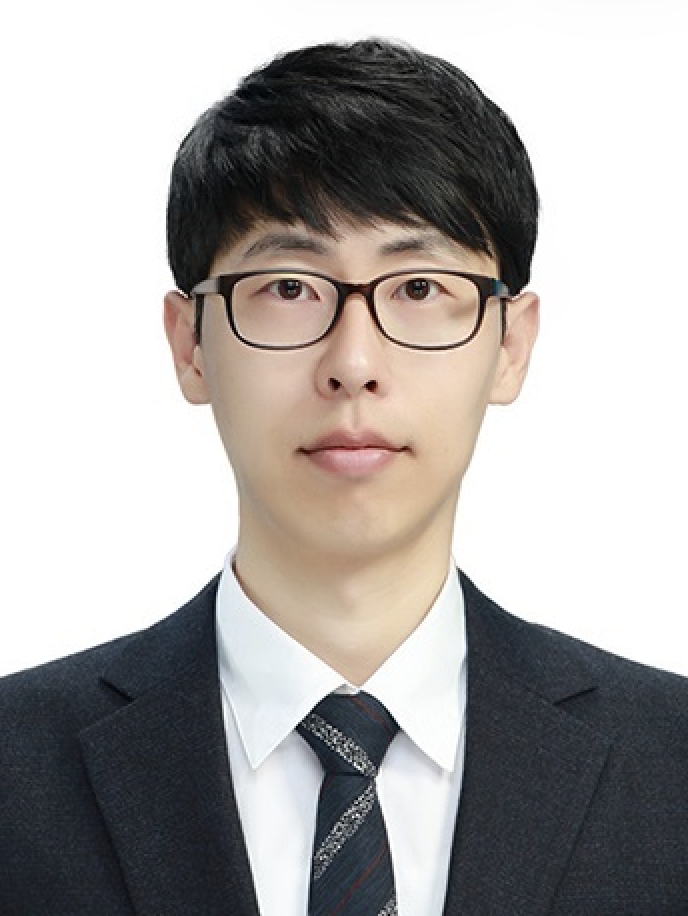
1. Hello, Doctor. Could you please introduce yourself?
Hello, my name is Jonghyuk Lim. I earned my Ph.D. at the Intelligent Semiconductor Research Laboratory in the School of Electrical Engineering and Computer Science at GIST. During my doctoral studies, I conducted research on terahertz (THz) spectroscopy using ultrafast femtosecond lasers and optical systems, as well as THz electromagnetic wave modulation based on semiconductor devices.
Currently, I work at ASML as an Applications Engineering Team Leader, where I lead projects focused on node transitions for customers and performance improvements of new tools and applications, based on YieldStar metrology evaluations.
2. What kind of research did you mainly work on?
During my Ph.D. program, I developed THz spectroscopy systems using femtosecond lasers and optical setups, and conducted research on controlling the polarization, phase, and directionality of THz electromagnetic waves using semiconductor devices. In particular, I worked on controlling THz emission characteristics using InAs-based structures and nanowire-based diodes, as well as manipulating THz waves through work-function engineering in metal–graphite structures.
After completing my Ph.D., I joined ASML and collaborated closely with customers on developing high-precision optical metrology technologies for overlay measurement and focus control in extreme ultraviolet (EUV) lithography processes. Specifically, I worked on multi-wavelength diffraction-based overlay measurements, diffraction-based focus variation measurements, and techniques to minimize overlay key asymmetry measurement errors through collaborative research.
3. What experiences during your research did you find most rewarding?
I felt a great sense of accomplishment when I identified new physical phenomena through optical experiments and published the results in SCI journals and presented them at international conferences. I also found it rewarding to know that these research outcomes could eventually contribute to technological advancements that positively impact people’s lives.
After graduation, I felt similarly fulfilled knowing that my work contributed to advancements in overlay metrology and patterning technologies in logic circuits and semiconductor memory devices—fields that have a significant influence on both the semiconductor industry and society at large.
4. How did you relieve stress during your research?
When stress accumulated during my research, I refreshed myself by taking walks around the GIST campus with my family or traveling to nearby areas in Gwangju and Jeonnam Province. I also maintained balance by exercising with lab colleagues or spending time working out at the gym. These activities were very helpful in maintaining focus and sustaining long-term motivation.
5. What have you been doing since completing your Ph.D., and what is your current role?
After completing my Ph.D., I briefly worked as a postdoctoral researcher to wrap up my research before joining ASML. In the early stage of my career there, I worked as an Application Engineer, evaluating new tools at high-volume manufacturing customer sites and providing optimized solutions through on-product data measurement and analysis for logic devices. I also collaborated with global teams, shared technology strategies, and led evaluation projects to help establish efficient and optimized processes.
Currently, as a senior team leader, I lead node transition projects for logic and memory customers, as well as evaluations of new tools and applications. I collaborate with Pathfinding, D&E, and Product teams to reflect customer process requirements, develop new metrology applications and key performance indicators (KPIs), and bring them into production.
6. What are your future goals?
My goal is to further strengthen my expertise not only in metrology but also in supporting customer node transitions and new tool evaluations using semiconductor lithography equipment. In addition, I aim to grow not only as a technology leader but also in people leadership and business capabilities. In particular, I aspire to become a leader who develops team capabilities through collaboration and maximizes organizational performance through global cooperation.
7. Is there anything you would particularly like to say?
As I once did, I believe many of you are experiencing various difficulties related to research or graduation. What I would like to emphasize is that while short-term research outcomes and graduation are important, it is equally important to continuously invest—even in small amounts of time—in the values and principles you believe in over the long term.
Moreover, as you engage in valuable and complex research in the future, I believe that skills and mindsets for teamwork, as well as building trust in research and professional environments, are crucial. By respecting different values and perspectives and collaborating effectively, you can build more constructive teamwork. With such leadership qualities, you will be able to fully demonstrate your capabilities both in your research field and in an increasingly diverse society.

