News & Event
Alumni Interview
- HOME
- News & Event
- Alumni Interview
- Author
- 전기전자컴퓨터공학부
- Views
- 110
- Registraion Date
- 2026-05-31
 No file Attached
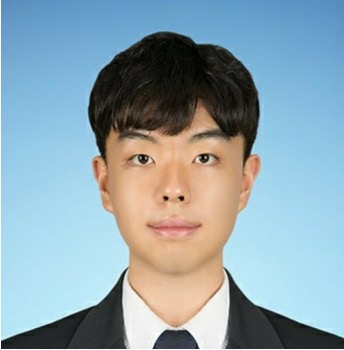
GIST School of Electrical Engineering and Computer Science (EECS) has produced numerous talents making strides in various fields. Today, we meet Dr. Yechan Kim, an alumnus who earned his Master's and Ph.D. at GIST and is currently contributing to the advancement of defense technology through AI and computer vision research at the LIG Nex1 Defense and Aerospace (D&A) AI Research Institute.
Q. Hello, Dr. Yechan Kim. Could you briefly introduce yourself and tell us about your current work? Hello. I was born and raised in Jeju Island and completed my undergraduate studies there. I entered the GIST EECS Master's program in March 2020 and received my Ph.D. in August 2026. Throughout my graduate studies, I have deeply researched Artificial Intelligence, Deep Learning, and Computer Vision. In June of this year, I joined the newly established LIG D&A (Defense and Aerospace) AI Research Institute, where I am continuing my defense-related AI research in the practical field.
Q. What research topics did you focus on during your graduate studies? My research can be broadly divided into my Master's and Ph.D. courses. During my Master's, I studied 'Imbalanced Learning,' which helps models learn and generalize robustly even when the data distribution is severely unbalanced (for example, when the number of images of dogs, cats, and lions varies greatly).
After entering the Ph.D. program, following my advisor's advice, I expanded my research to areas that could lead to practical funding. I focused on 'Aerial Visual Understanding' technology, which analyzes aerial videos taken from satellites, drones, or aircraft, and applied it to 'Military Target Recognition'. Since military data is very difficult to secure in reality due to security constraints, I artificially generated synthetic data. Through this, I mainly dealt with Zero-shot environment research, where targets are recognized even in untrained situations.
Q. What was the most memorable or rewarding moment during your research process? While I was happy when a research proposal I led wased as a project by institutions like the Agency for Defense Development (ADD), the most memorable moments were when I solved problems I had considered 'impossible' through the help of others. There were many times when I hit a wall during coding or mathematical proof processes and felt I could never solve it alone. Instead of suffering alone, I shared my situation with people around me, got hints, and adjusted my direction. Through this, I deeply realized how powerful 'collaboration and collective intelligence'—rather than just my individual ability—can be in research.
Q. How did you manage your stress during your rigorous graduate life? Rather than grandiose methods, I enjoyed small releases. Although I am not a great singer, going to a coin karaoke room to sing, or simply sharing my difficulties with close friends relieved a lot of my mental burden.
I also want to emphasize to my juniors that when you are truly struggling mentally or experiencing severe depression, you should not hesitate to seek professional help. You can utilize the psychological counseling center on the GIST campus, or seek external psychiatric treatment if needed. Due to social prejudices, many people are still reluctant, but issues like sleep disorders or mood swings can be treated much more easily than expected with a professional's help.
Q. Among many options, was there a special reason you chose GIST for your graduate studies? Actually, during my undergraduate years, I was preparing for the teacher certification exam to become a teacher. Realizing that it wasn't my path, I began preparing for graduate school late, around September or October. Among the remaining options at that time, GIST's promotional brochures caught my eye the most, and its scholarship benefits were excellent. Most importantly, the fact that I could fly from my hometown, Jeju Island, to Gwangju in just 20 to 30 minutes made it feel psychologically very close.
Q. How was the actual research environment and campus life you experienced at GIST? First of all, I really liked the cozy and beautiful flat campus. Also, taking 100% English classes was unfamiliar and difficult to adjust to at first, but as I endured it, I naturally gained the confidence to converse with exchange students from various countries, such as India and Pakistan. The environment where you can study without worrying about tuition and the great dormitory facilities are also huge advantages. A minor but great detail is that the dormitory air conditioners are not centrally controlled, allowing individuals to adjust the temperature freely, which was a great factor in boosting academic efficiency.
Q. With the rapid advancement of AI technology recently, what kind of research do you want to pursue in the defense sector going forward? Recently, LLMs (Large Language Models) and LMMs (Large Multimodal Models) are major trends, but I want to take a step further and apply the concept of a 'World Model' to defense. Beyond simple language or image generation, my big goal for the future is to develop an artificial intelligence framework that understands physical laws and universal common sense, allowing it to simulate and predict long-term battlefield situations.
Q. Lastly, do you have any realistic advice for prospective GIST EECS graduate students or juniors? First, I hope you accept that in research, effort doesn't always lead to immediate results. Failing is also a part of the learning process. Second, try not to act like a 'Greedy' algorithm that only seeks maximum immediate profit in your relationships or lab life. Since your calculations and predictions can't always be right, it is essential to compromise and coordinate properly with your advisor and colleagues. Lastly, don't be a 'frog in a well'. I encourage you to step outside the lab, talk with people from diverse backgrounds, and if you get the chance, build your own solid values by experiencing internships at other labs or institutions.

